How analytics help us improve the app behind the scenes
The first time you open Spike we ask one question: may we use analytics? About three in four people who answer say yes. This is what that answer lets us see, what it never shows us, and what we changed in the last month because of it.
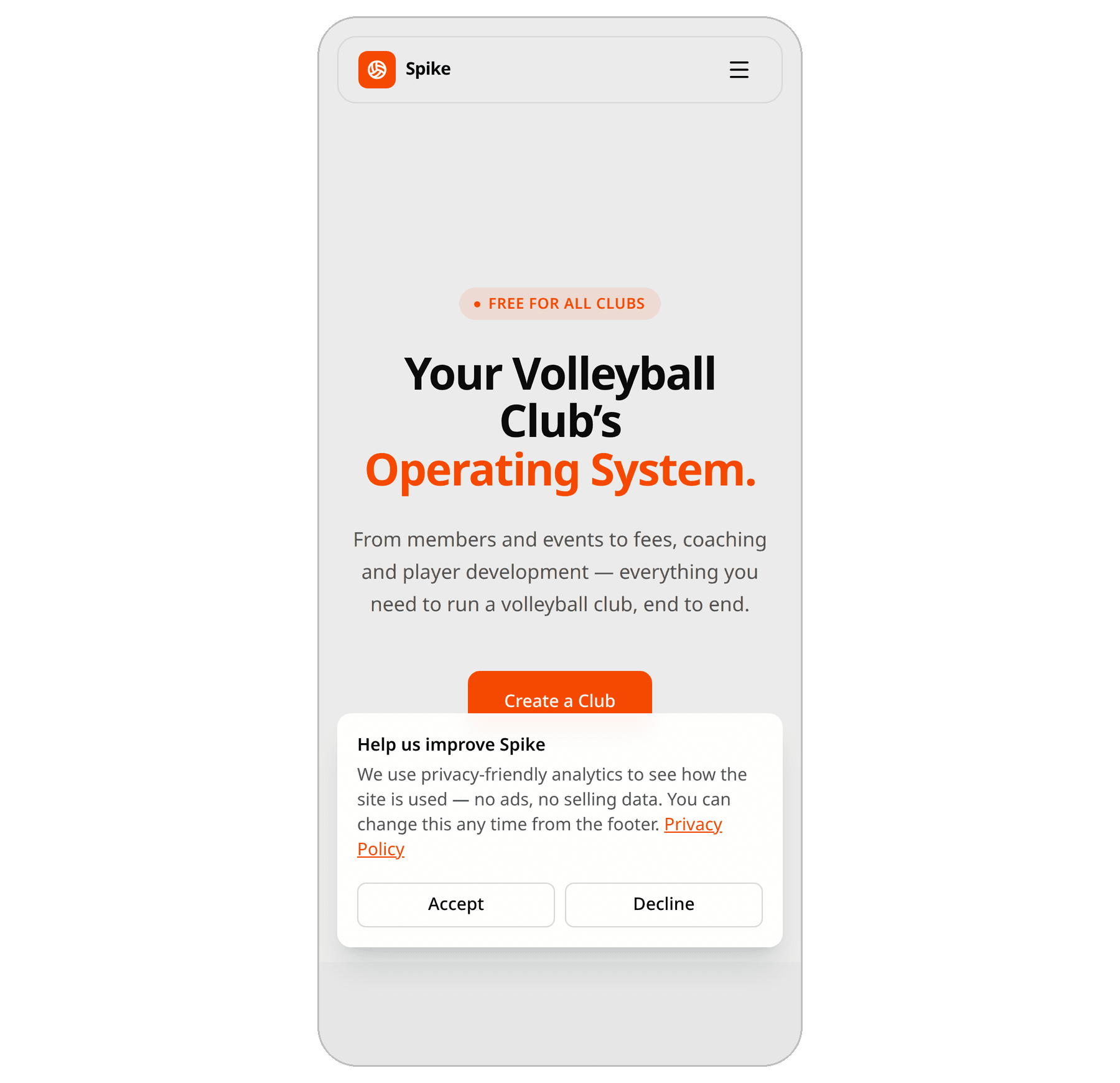
What we see when you say yes
- Which screens are opened, and in what order. “Events, then an event, then its member list”, with no names on it and nothing that was written there.
- That something was done. An event was created, an invitation was answered, a payment was started. Not who it was sent to and not what it said.
- What it was done on. Phone or computer, the app version and the country.
- On the website only, a recording of the visit. It shows where you went and what you pressed. Anything you type is hidden, and so are names, addresses and messages. The family settings and a child’s first sign-in are never recorded at all. The phone app makes no recordings.
What we never see
- The text of your messages, posts and comments.
- What an under-18 does in the app or on the website. Those accounts are not asked the question, and nothing is sent from their phone or browser.
- What you do in the app or on the website before you have answered, or after you have said no.
One thing does not depend on your answer. Our servers count what they have to carry out anyway: an account was opened, a club was created, a payment went through. Those are totals, with no screens and no taps behind them. The same goes for error reports: when the app or the website breaks, it tells us where.
We show no adverts and sell no data. The analytics are kept in the EU and are read only by the people who build Spike.
What it changed: the tactics board
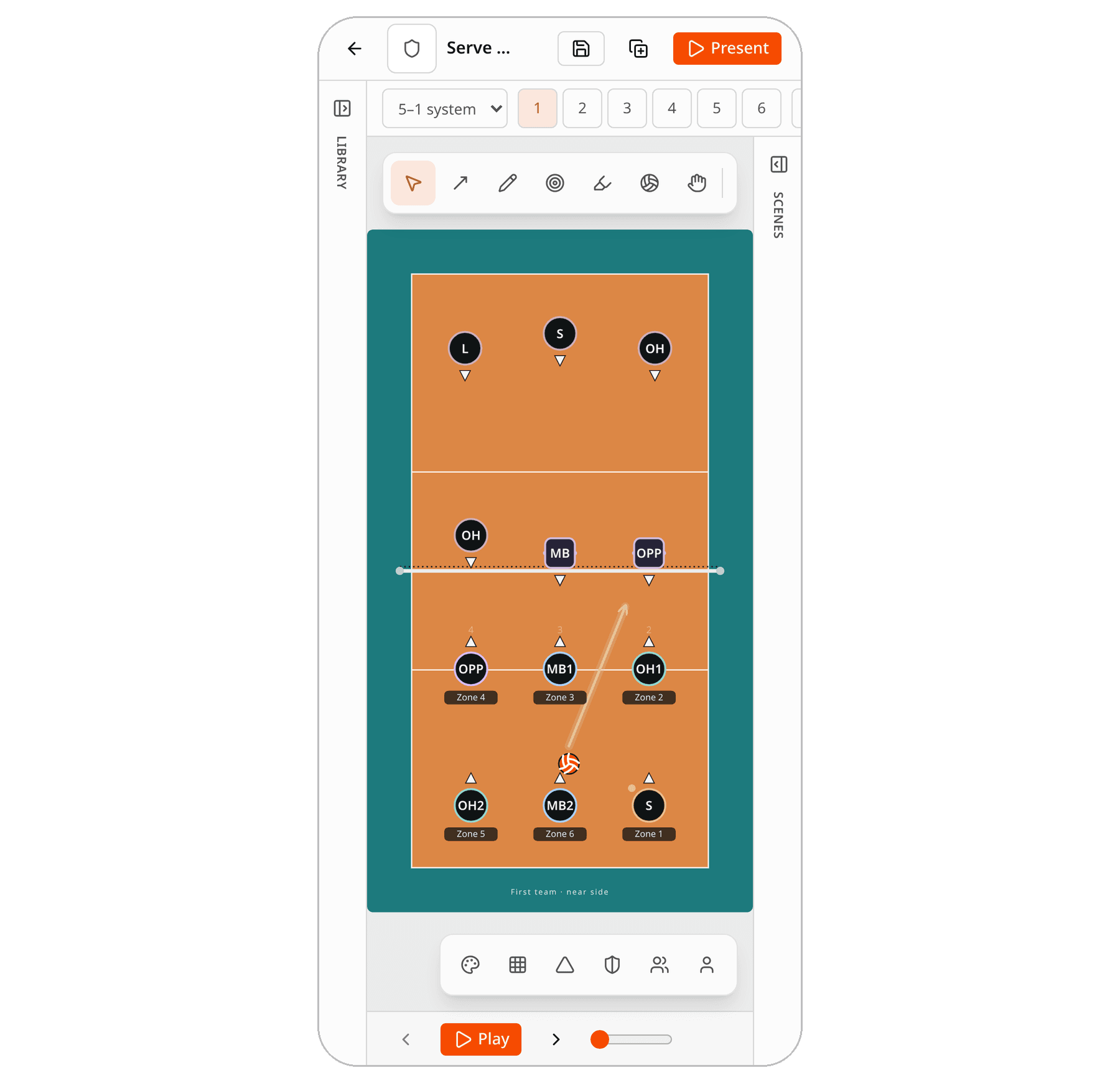
We expected people without a club to look around and leave. Many did, but the ones who opened a tactics board stayed: 41 of 139 boards were open for more than a minute, and six of the eight people who drew their own came back another day. On a phone, though, the board did not fit, and Play did not always move anything.
So that is where the next weeks went.
- The board fits a phone. The court takes the screen, the tools sit above and below it, and Play always moves something. The phone app has the boards too. Since then, 8 of the 19 people who used a board were on a phone.
- It opens without an account. Anyone can open the board and draw. We ask for an account only when you want to save.
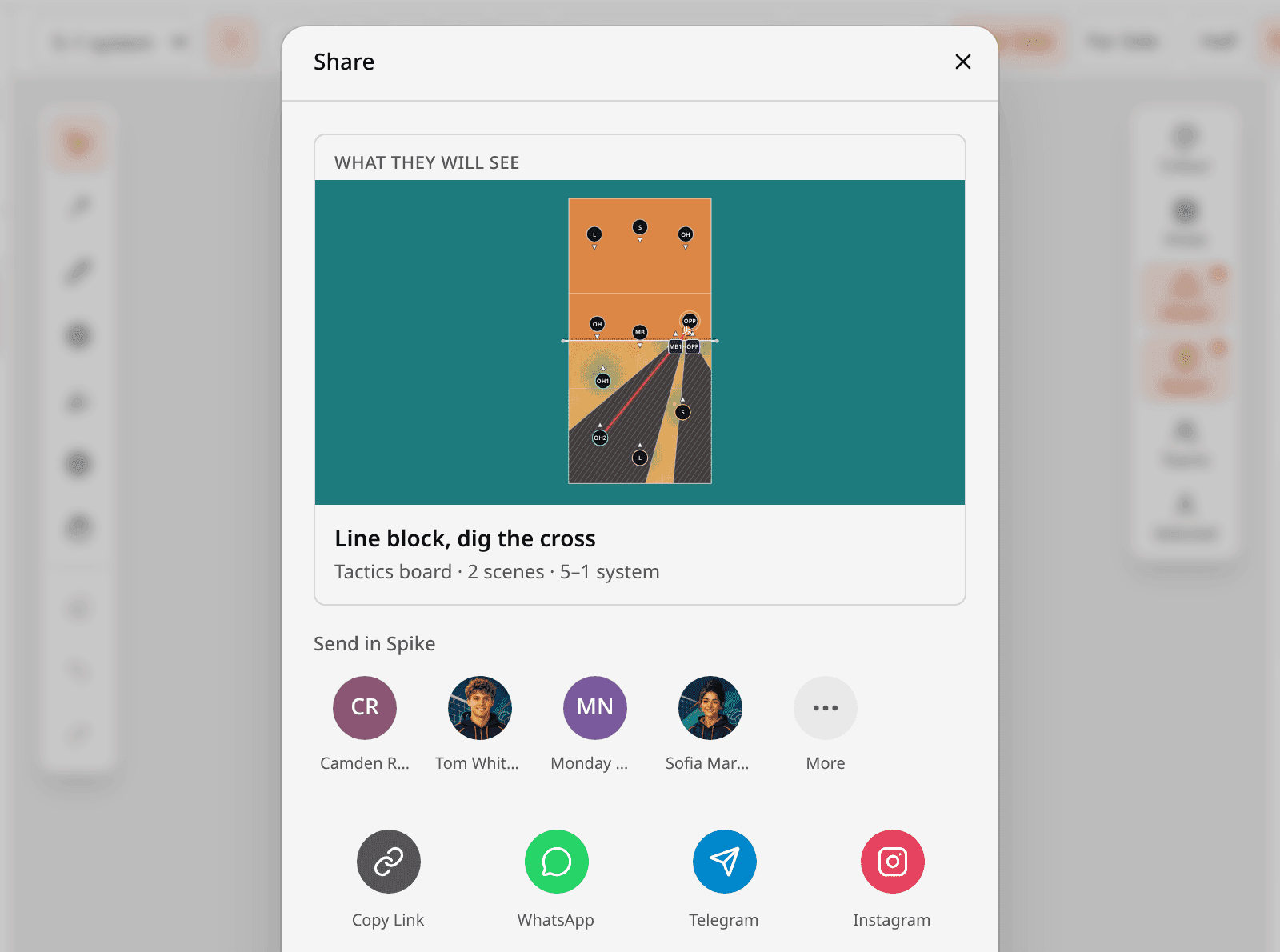
- A board can be shared with a link. The person you send it to sees the scenes and can play them, with positions in place of names. More on that in the 8 October update.
What it changed: signing up on a phone
We built club set-up for a laptop: a committee member at a desk. Then we counted. Of 61 people who opened it in one week, 48 were on a phone, and the buttons they needed were below the bottom of the screen. Sign-up and set-up now ask for less, and their buttons sit at the bottom of a phone screen where a thumb reaches them.
What it changed this week
Last week we went through everything again: the analytics, the error reports and our own server logs. These went into this week’s update.
- Signing in with an emailed code works in the phone app. On the website it worked. In the app it had not worked once, and nobody had told us: people used their password, or gave up.
- A club invite link on a slow connection offers Try again. It used to say the club did not exist.
- Notifications no longer lead to an event that is gone. One player told us; the numbers showed it was 665 notices for 142 people.
- Long names are shown in full in an event’s member list, and a host who has accepted says so.
- The app no longer closes on some Android phones when a list gets shorter while it is being drawn.
One we have not fixed yet. Of 46 people who joined last week without a club, 17 looked at an Events tab with nothing on it and went no further. That is what we are working on now.
Why we ask instead of assuming
Most of what we fix comes from someone telling us: a coach who could not read surnames on a member list, a parent whose notification opened nothing. Analytics show the other kind of problem, the kind nobody reports because they have already closed the app.
Enough of you have said yes for us to see where people get stuck. Each further yes makes the picture more accurate, most of all for the smaller groups: referees, parents, the one person in a club who sets everything up.
You can change your answer at any time: in Settings on the phone, or from the link at the bottom of any page on the website. What we collect and how long we keep it is in the Privacy Policy.